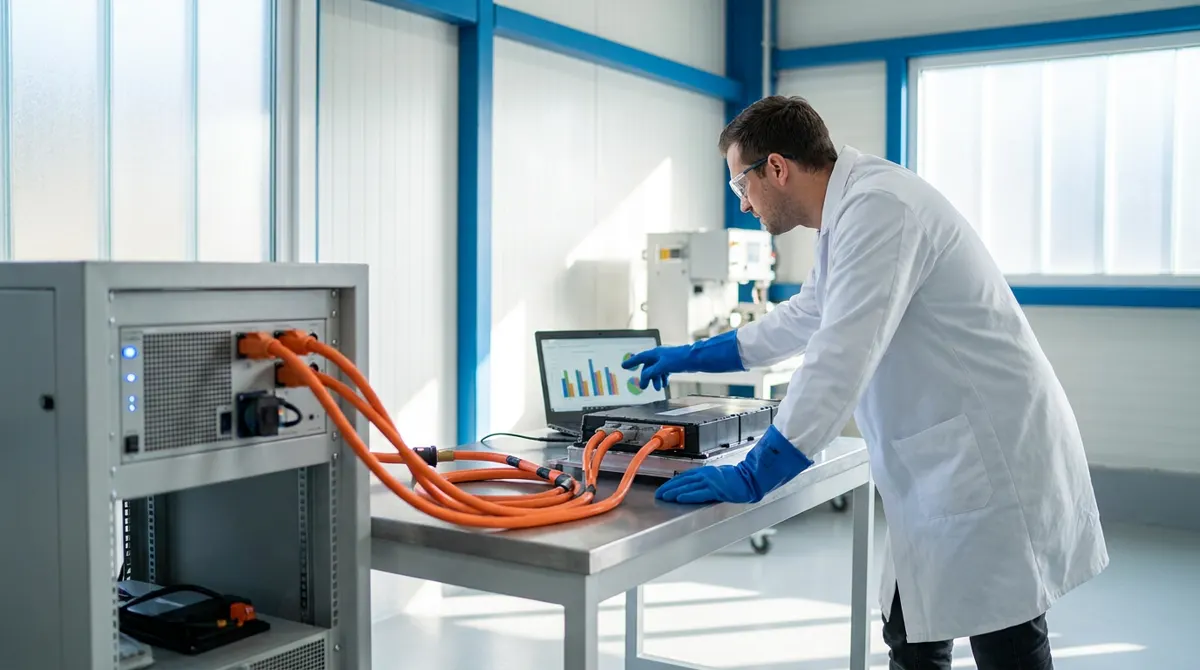
In short: Ecuhawk lets EV and BMS teams decode CAN with their DBC, build pack and cell panels, control power supplies and electronic loads, run UDS diagnostics and produce reports, with the CAN adapters they already use.
Common BMS and EV test tasks
- Watch cell voltages, temperatures, state of charge and contactor states live.
- Drive charge and discharge profiles with a bidirectional supply or an electronic load.
- Check alarms and protection limits and log every event.
- Simulate the vehicle or charger side of the CAN bus with rest-bus simulation.
- Use battery models (FMU or Simulink) for closed-loop tests before hardware is ready.
- Run end-of-line checks on every pack or controller.
Why teams outgrow scripts
Many EV startups begin with Python scripts and a cheap adapter. That works until the team grows: scripts multiply, nobody owns them, operators cannot run them, and there are no proper reports. Ecuhawk keeps Python for flexibility and adds the bench, panels, safety and reports around it.
Questions
What software do BMS teams use for CAN testing?
Large OEMs often use commercial tools such as Vector CANoe. Smaller EV and BMS teams frequently use Python with python-can, or vendor monitoring tools. Ecuhawk sits in between: professional features with Python inside and support for common adapters.
Can Ecuhawk control a bidirectional power supply or electronic load?
Yes. Programmable supplies and loads controlled over LAN, USB or serial can be added as devices and used in panels and tests.
Can Ecuhawk test EV charging communication?
Charger communication over CAN, such as the Bharat DC-001 and GB/T style chargers, can be simulated with rest-bus and DBC today. CCS with ISO 15118 over power-line communication is planned.
Can I simulate a battery before hardware is ready?
Yes. Ecuhawk can run FMU, DLL and Simulink-exported models in closed loop with the bus.